Il Nuovo Orfeo
Sìdar Ensemble
_1.jpg)
Sìdar Ensemble
Elena Mascii, voice
Lisa Soardi, theorbo
C. Monteverdi (1567-1643)
Laudate dominum in sanctis eius SV 287 (from Selva morale e spirituale, Venice, 1641)
A. Grandi (1590-1630)
O quam tu pulchra es (from Ghirlanda Sacra, Venice, 1625)
J. H. Kapsberger (1580-1651)
Passacaglia in D (from Fourth book of tablature for chitarrone, Rome, 1640)
G. Rovetta (1596 ca.–1668)
Lacrime d’Erminia (from Madrigali Concertati, Libro Primo, Venice, 1629)
J. H. Kapsberger
Toccata arpeggiata (from Libro primo d’intavolatura di Chitarrone, Venice, 1604)
C. Monteverdi
Quel sguardo sdegnosetto SV 247 (from Scherzi musicali, Venice, 1632)
B. Strozzi (1619-1677)
Eraclito amoroso (from Cantate, ariette e duetti, Op. 2, Venice, 1651)
C. Monteverdi
Sì dolce è’l tormento SV 332 (from Quarto scherzo delle ariose vaghezze, Venice, 1624)
30’ | Admission with museum ticket
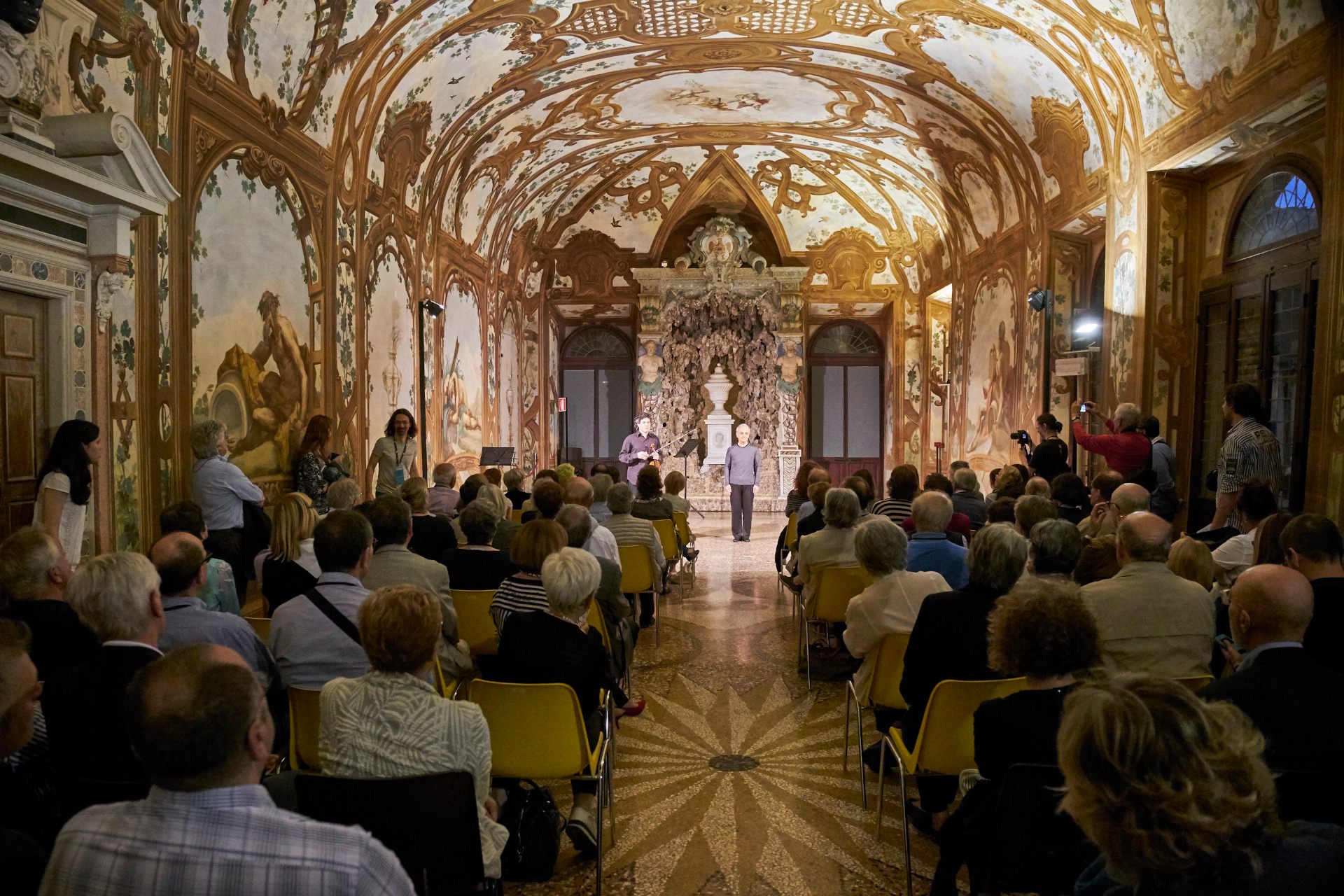
The title of the concert evokes the myth of Orpheus and the power of music to move, transform, and “open passages” within the human soul. In this dialogue between voice and instruments, Elena Mascii and Lisa Soardi bring to the audience the intimacy and fascination of a repertoire that still retains its evocative power today.
The programme weaves together sacred and secular works by composers who shaped Venetian musical life in the early decades of the seventeenth century: from Monteverdi — from whom the title of this concert is drawn — to Alessandro Grandi, collaborator at San Marco, and Giovanni Girolamo Kapsberger, author of extraordinary music for chitarrone suspended between virtuosity and harmonic experimentation. Alongside them, Giovanni Rovetta and Barbara Strozzi, an exceptional figure in the musical landscape of the time, who published collections of cantatas and arias of remarkable expressive intensity: her Eraclito amoroso encapsulates the full theatricality of Venetian Baroque, between melancholy, irony, and passion.
A musical journey through word, affect, and wonder in seventeenth-century Venice, tracing the legacy of Claudio Monteverdi and the new Baroque expressivity.
Text curated by Federica Mastantuono
Trame