Temi popolari dal '600 al '900
Molardi
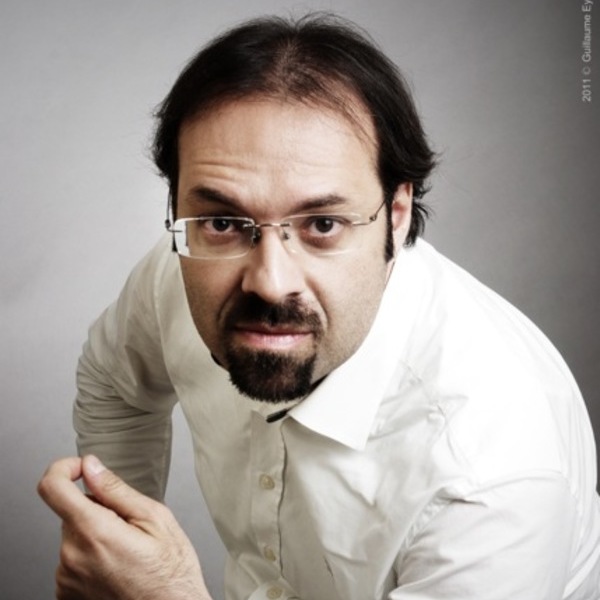
Stefano Molardi, organ
Claudio Merulo (1533–1604)
Toccata dell’Undicesimo detto Quinto Tuono
Canzon detta “La Rolanda”
Franz Danksagmüller (1969)
Estampie
Girolamo Frescobaldi (1583–1643)
Capriccio sopra l’aria “Or che noi rimena”
Eugenio Maria Fagiani (1972)
Ground
Variations on “Unter der Linden grüne”
Francisco Correa de Arauxo (1584–1654)
Canción Susana
Jürgen Essl (1961)
Capriccio sopra la serenità
40’ | Ticket offered by Oficina OCM and Gruppo Tea
PLEASE NOTE: Tickets can be reserved and collected only at the Trame Sonore Festival Box Office
The organ journey spans centuries of invention, beginning with the Venetian Renaissance of Claudio Merulo. His Toccata alternates solemn choral blocks with virtuosic “diminutions,” or rapid-scale passages, while the Canzon detta “La Rolanda” transforms the freshness of the French chanson into bright counterpoint that imitates vocal phrasing.
This freedom is further expanded by Girolamo Frescobaldi, whose Capriccio deconstructs a popular air and rebuilds it through a labyrinth of harmonic eccentricities and sudden tempo shifts.
From Spain, Francisco Correa de Arauxo brings dense mystical polyphony in the Canción Susana, making use of the “medio registro” technique to let a single hand sing over an austere accompaniment.
The contemporary layer enters with Franz Danksagmüller, whose Estampie transforms the medieval dance into a hypnotic, percussion-like mechanism. Eugenio Maria Fagiani, instead, develops the principle of variation: in Ground he uses a pedal bass to build relentless tension, while in the Variations on “Unter der Linden grüne” he reimagines a sixteenth-century theme by Sweelinck with twentieth-century colors and dissonances.
The program closes with Jürgen Essl. His Capriccio sopra la serenità avoids the organ’s monumental power in favor of a transparent, dynamic writing. It is an architecture of light requiring precise control of touch to generate an active form of calm.
Text by Martina Sangermano
Trame