Urban Cluster
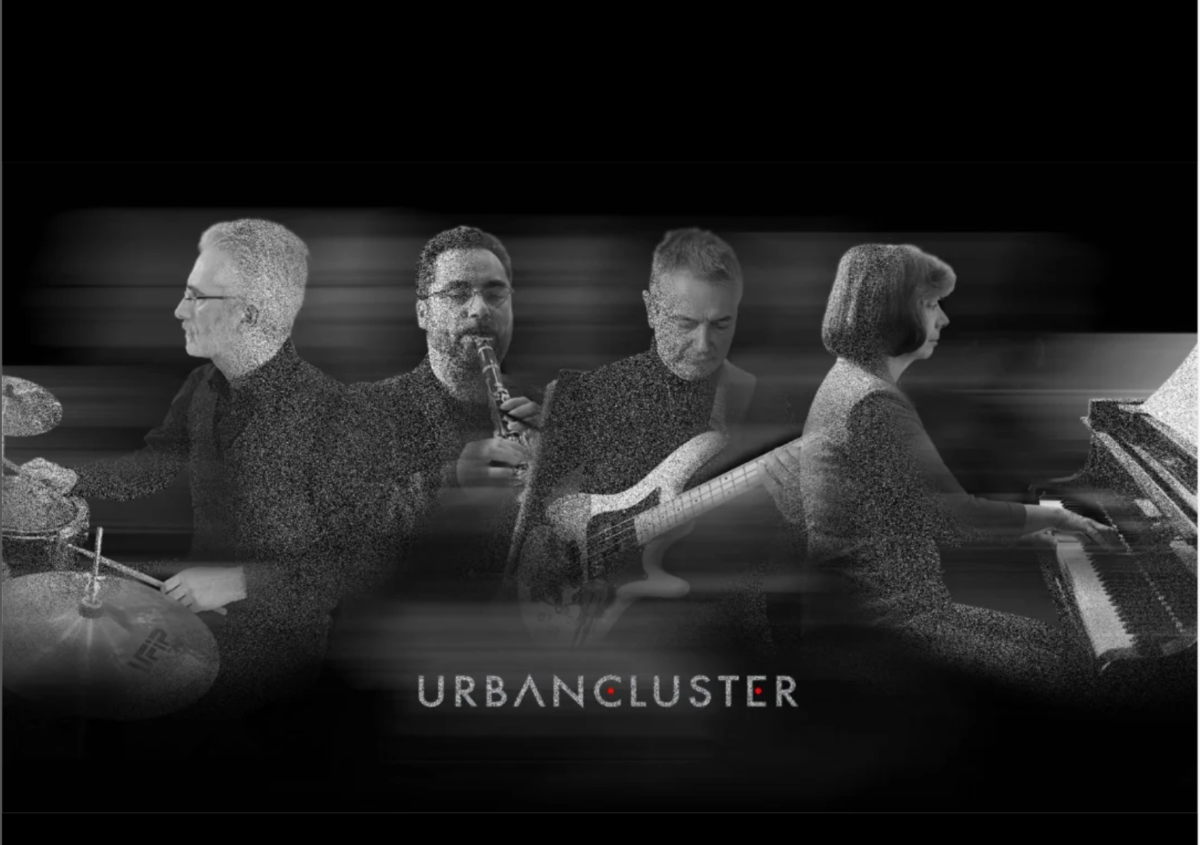
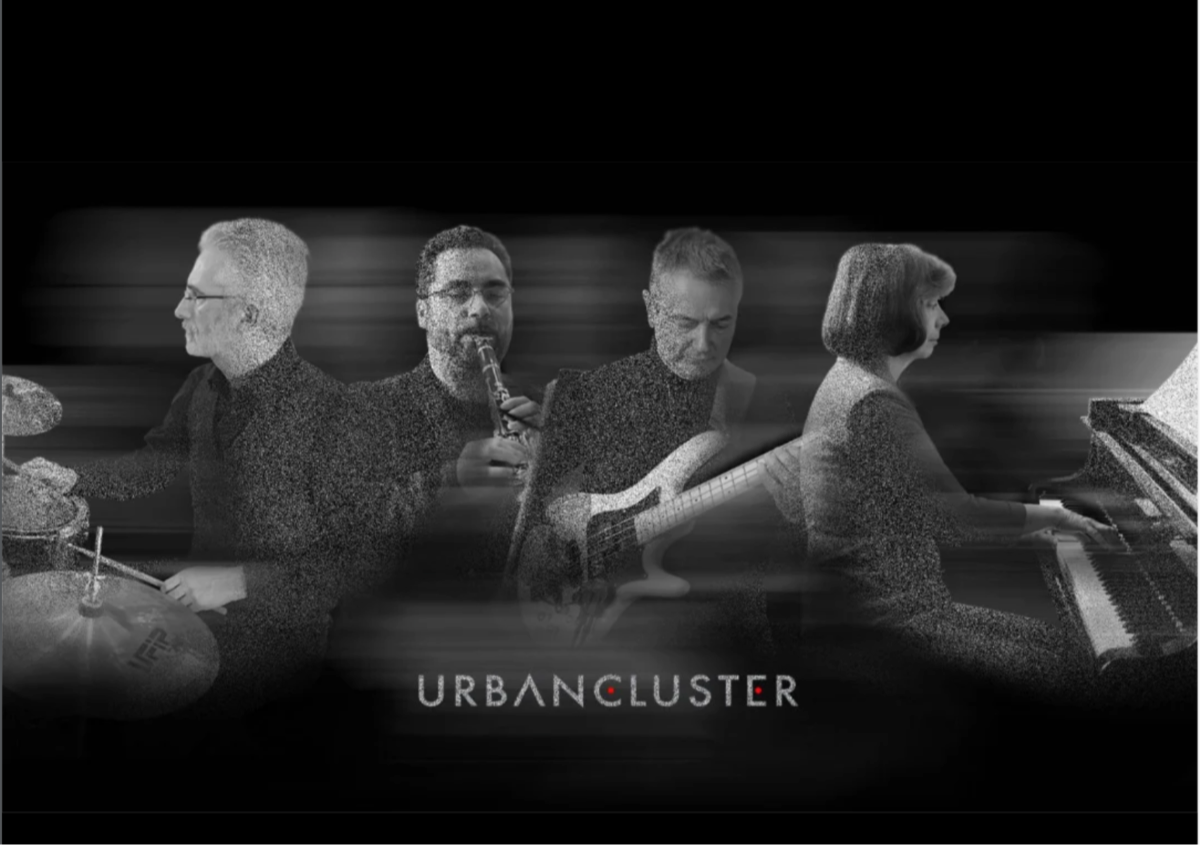
Urban Cluster is an ensemble active since 2020 in sonic experimentation across various areas of the contemporary music scene. The quartet—Francesco Esposito (clarinet), Emanuela Ferrari (piano), Paolo Ragni (drums), and Rino Trasi (electric bass / guitar)—weaves together jazz, contemporary music, 20th-century polystylism, and free improvisation, creating a personal and immediately recognizable musical language that conveys an idea of contemporary music not necessarily bound to academic conventions.
This aesthetic finds particularly strong expression in the album Time Dances on the Train to Baltimore (DaVinci Publishing), a sonic journey that combines narrative, interplay, and a rich palette of harmonic, dynamic, and electronic nuances, without stylistic preclusion.
Alongside its jazz-oriented projects, Urban Cluster is also active in musical theatre, collaborating with actors and writers in productions of strong emotional and social impact. Among the most recent are Semplicemente Anna (Casa della Memoria, Milan, 2024), dedicated to Anne Frank, a musical and theatrical narrative that intertwines memory, storytelling, and contemporary soundscapes, and Le Mie Donne (Teatro Blu, Milan, 2026), a tribute to seven women who changed history, through original music, texts, and dramaturgy.
In the jazz scene, the quartet has frequently been featured at the JazzMi Festival in research projects focused on generative improvisation and sound manipulation, collaborating with improviser Francesca Naibo and violinist Eloisa Manera. More recently, it has developed a project dedicated to the jazz repertoire of Pat Metheny with guitarist Giampiero Spina.
Urban Cluster makes its debut at Trame Sonore with two crossover programs, performed through its multigenre identity mediated by jazz and contemporary language, enriched by the classical contribution of violinist Valentina Danelon and flautist Francesca Torri.
In one concert, the ensemble presents two compositions by Gershwin and Copland, originally written for orchestra and specially arranged for this formation in order to highlight a classical approach in form that nevertheless evokes a jazz sensibility—an aspect already present in the composers’ original writing.
In the other concert, it presents an original work by Rino Trasi, The Four Seasons. Far removed from the famous works of the same name by Vivaldi and Piazzolla, Trasi’s Seasons emerge from different linguistic means, moving between 20th-century tradition, jazz, and contemporary music with the aid of electronics. The ultimate aim is not to depict the seasons in an onomatopoeic sense, but to rediscover—through an inner journey—the emotions we experience in the changing moments of nature, which continually surprise us.