Quartetto Indaco
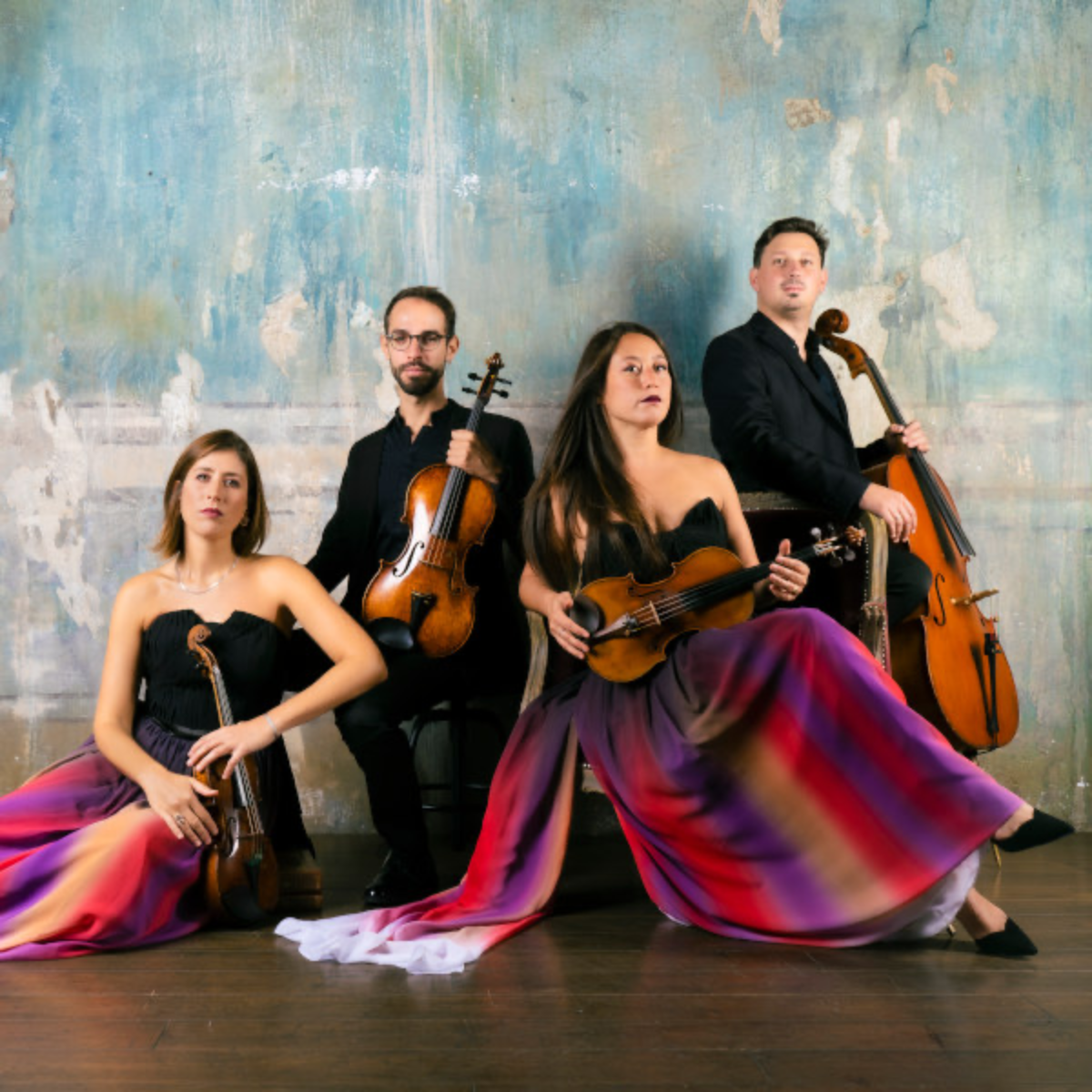
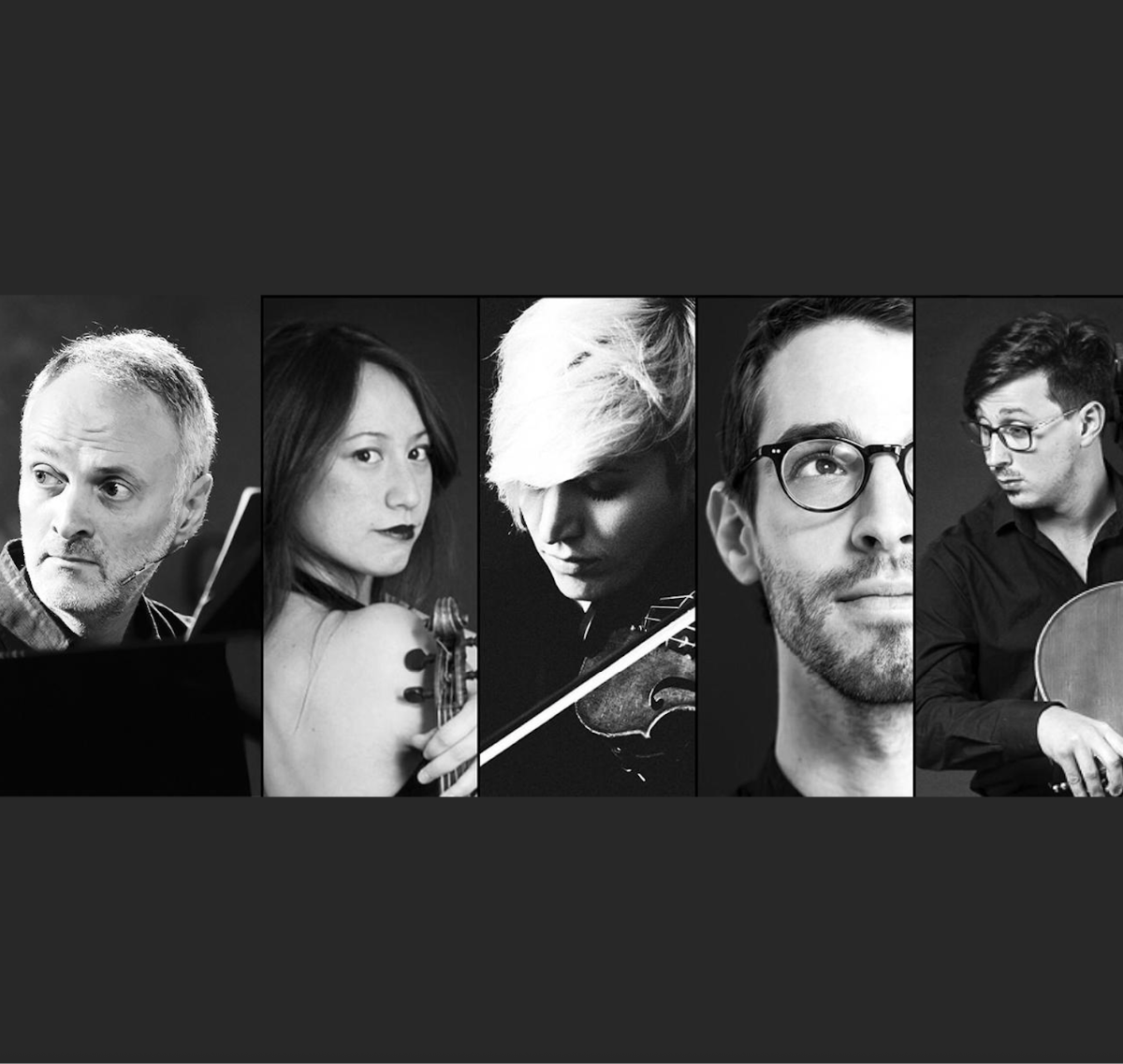
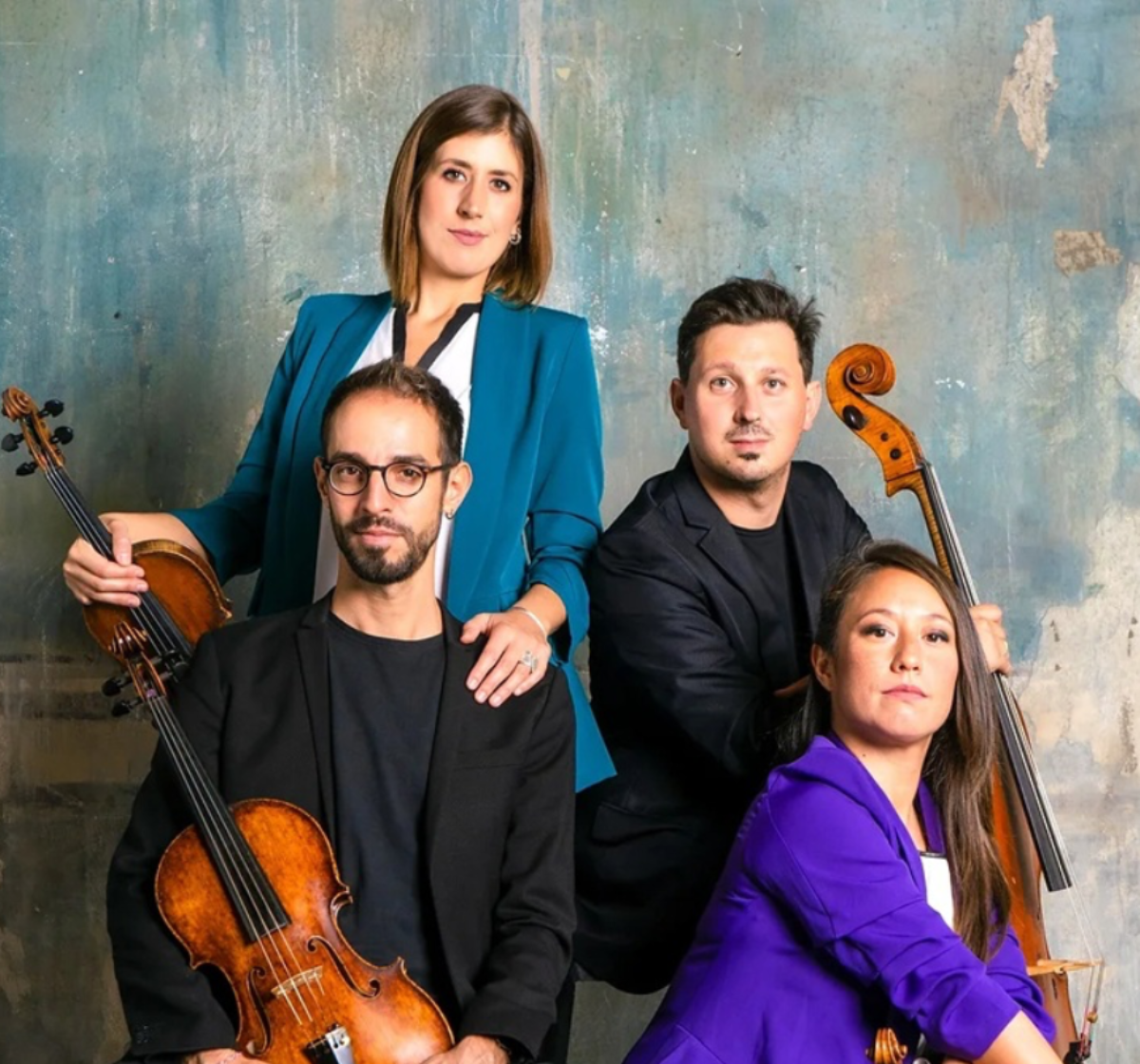
Quartetto Indaco was born as the highest expression of four artistic visions deeply rooted in the past and in the passions of each of its members. A love for research, for the plurality of genres, and for the countless nuances of the voices of today, yesterday, and tomorrow is the constant driving force that Indaco brings to every stage it performs on, with sincerity, freshness, and dedication. The quartet formation is experienced by its members as both an artistic and social laboratory — a circle that includes, throughout its journey, all those who have accompanied it along the way.
Formed by Eleonora Matsuno and Ida Di Vita on violins, Jamiang Santi on viola, and Cosimo Carovani on cello, on May 18, 2023, after four rounds involving ten quartets from around the world, the ensemble won the Osaka International Chamber Music Competition in Japan. The competition, among the most prestigious on the international scene and one of the few quartet competitions recognized by the World Federation of International Music Competitions, awarded the Italian ensemble the First Prize along with two Special Prizes.
This victory carries historic significance: it marked the first time an Italian quartet had won First Prize at one of the major international string quartet competitions — a sign both of the exceptionally high level achieved by Italian musicians today and of the flair and joyful creative freedom of Quartetto Indaco, which convinced the international jury chaired by the great Japanese cellist Tsuyoshi Tsutsumi.
Each member of the quartet has a multifaceted background ranging from teaching and early music to leadership roles in orchestras. Another distinctive feature is the presence of a “composer in residence,” namely the group’s own cellist, who actively writes for the ensemble, composing tailor-made works as well as original music and arrangements for the many projects the quartet continually develops. Chief among these is the project Moto Contrario, focused on mental disabilities, supported by the European platform MERITA and developed in collaboration with visual artist Letizia Castellano. The project creates a narrative journey connecting the story of Robert Schumann with that of the Anglo-Korean violinist Sarah Kim-Cross, who, through her own words, sought to bring humanity’s attention to her painful journey through illness and all its implications.
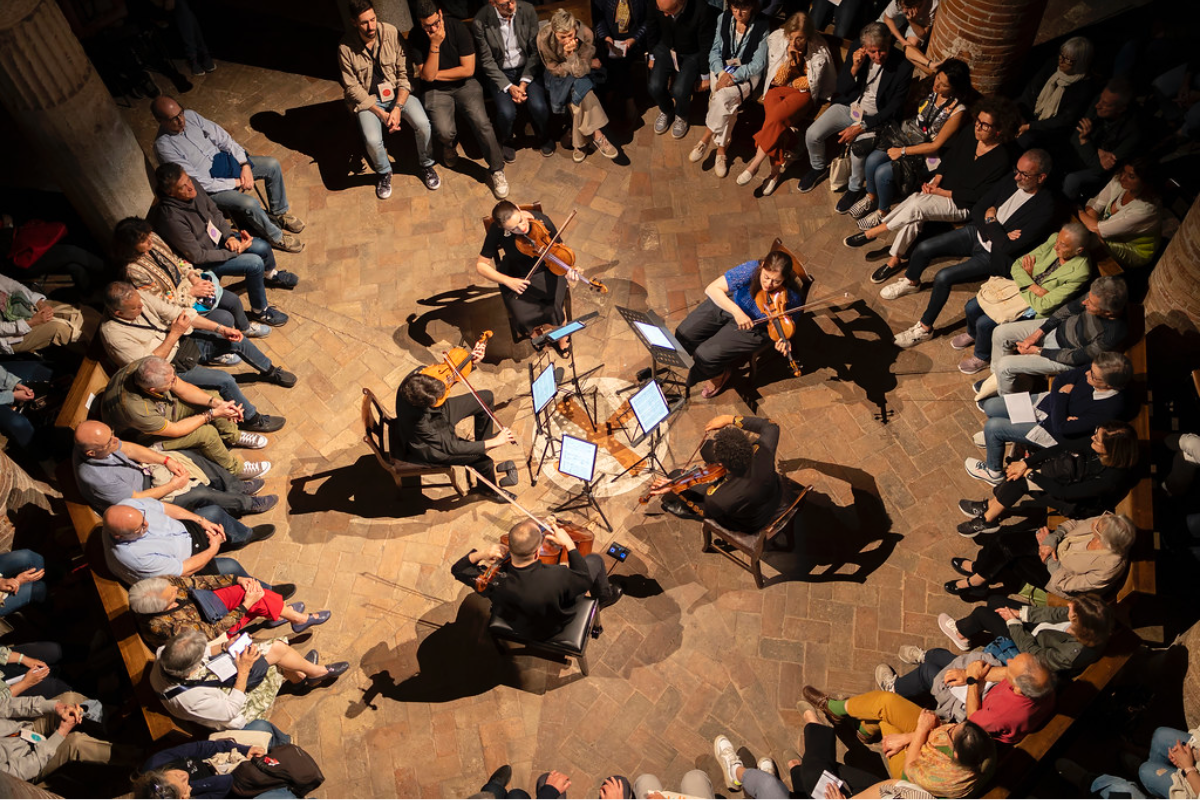
One of the quartet’s major missions, alongside teaching at leading public institutions, is to recreate and rediscover the true experience of chamber music by bringing it to unconventional venues — such as prisons — and by working with schools and companies, using the quartet as a metaphor for listening, growth, acceptance, and open sharing.
The quartet is also the creator of the Qu.B.E. (Quartet Based Ensemble) format together with Orchestra Milano Classica, of which it has been quartet in residence since 2017. This initiative combines profound knowledge of the chamber orchestra with that of the string quartet, developing projects focused on adaptation and in-depth exploration of repertoire for string orchestra.
The quartet boasts collaborations with internationally renowned artists including Alexander Lonquich, Alessandro Taverna, Giovanni Bietti, David Krakauer, Mao Fujita, Avi Avital, Julian Bliss, Uri Caine, and Claudia Barainsky.
Born in the Italian cradle of quartet playing at the Scuola di Musica di Fiesole through the inspiration of Piero Farulli, and alongside their academic studies with mentor Oliver Wille (Kuss Quartet), the ensemble trained with distinguished figures of the quartet tradition such as Günter Pichler (primarius of the Alban Berg Quartet), Reiner Schmidt (Hagen Quartet), and the great German quartet master Eberhard Feltz.
Recently, the quartet performed at the Accademia Nazionale di Santa Cecilia in Rome and is scheduled to make its debut at London’s Wigmore Hall in September.
Eleonora Matsuno performs on J. B. Vuillaume’s 1869 violin, formerly owned by Paolo Borciani, the legendary first violinist of the Italian Quartet, thanks to a private loan. Ida di Vita performs on an 1832 violin. Jamiang Santi performs on a viola made for him in 2019 by the Polish luthier Adam Stalmach. Cosimo Carovani performs on an 1840 Charles Claudot cello.
Quartetto Indaco is a Pirastro Artist.